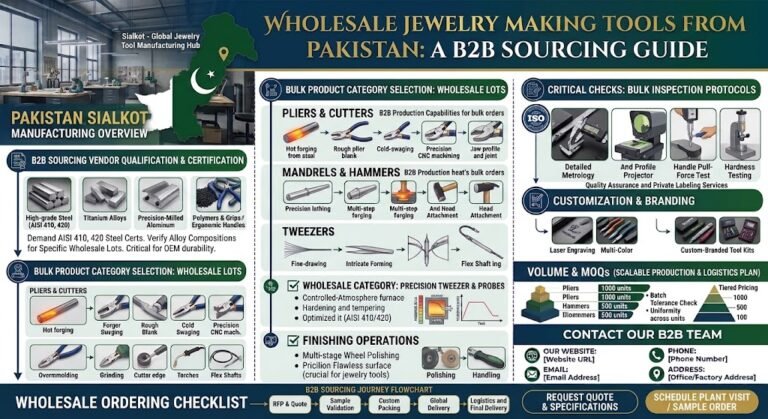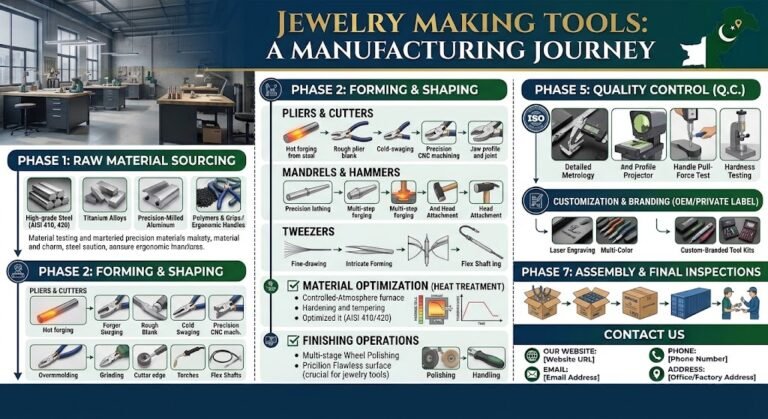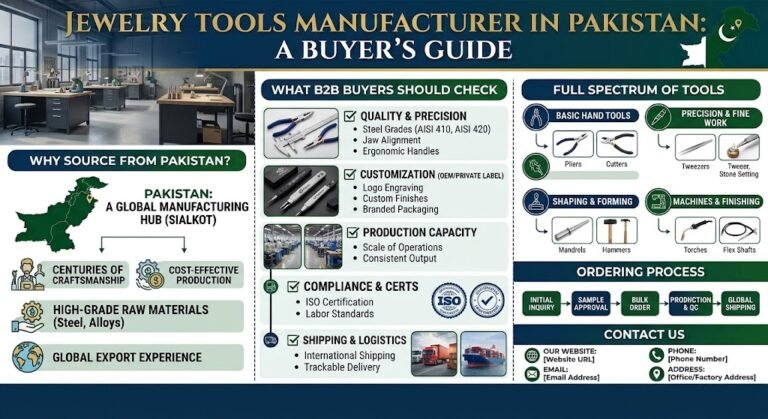
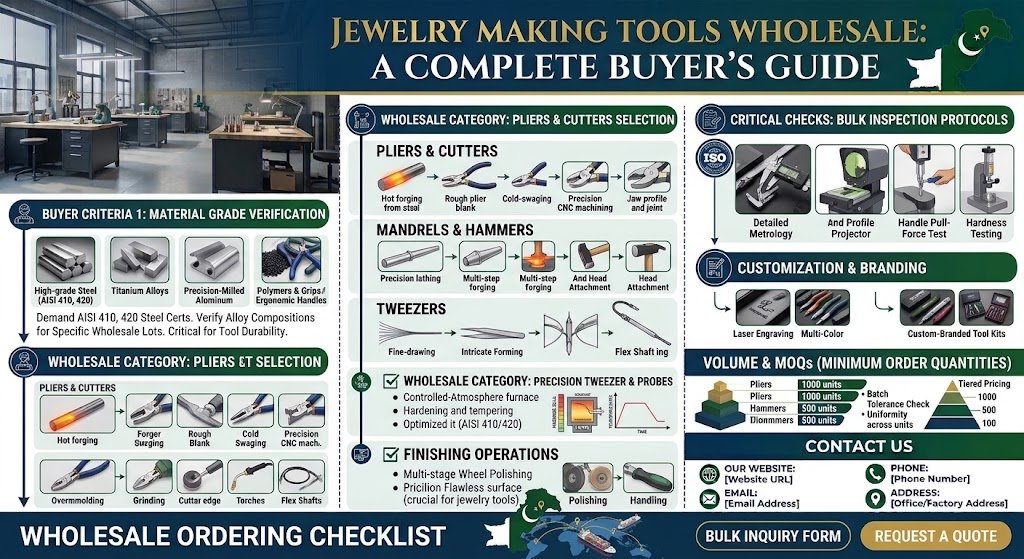
Crafting fine jewelry takes precision, skill, and the right tools. Whether you run a jewelry manufacturing unit, a growing brand, or a retail distribution business, quality tools protect both craftsmanship and profit. This guide covers the essential jewelry making tools wholesale buyers should stock. It also explains which features matter most and why buying directly from a manufacturer pays off.
Essential Wholesale Jewelry Tools to Stock
Professional jewelers expect durable, precision-engineered tools. Therefore, a strong catalog covers four main groups. Buyers can browse the full jewelry tools category to see the available range.
Precision Pliers and Wire Cutters
Pliers are the most used tools in any workshop, so they deserve the most attention.
- Nylon jaw pliers prevent scratches on delicate wire during bending and shaping
- Round nose pliers form loops and curves for wire wrapping
- Bent nose pliers reach tight spaces at an angle
- Parallel pliers grip evenly along the full jaw
- Forming pliers shape wire into consistent curves
- Lindstorm pliers give a precise, controlled grip for fine work
- Ring setting pliers hold rings steady during setting and repairs
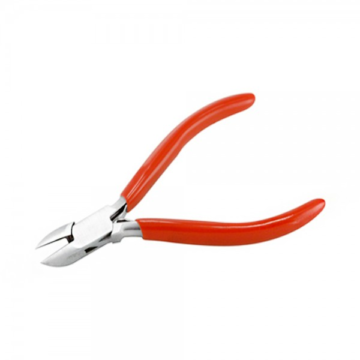
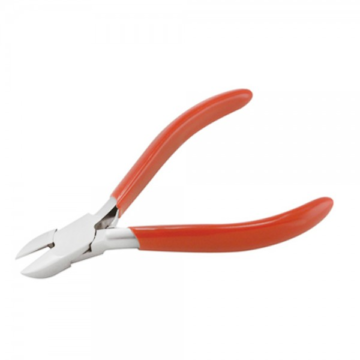
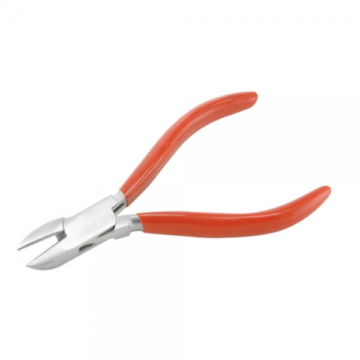
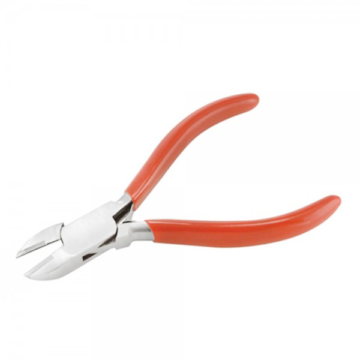
- Heavy-duty cutters make clean cuts on silver, copper, and stainless steel wire
Forming and Shaping Equipment
Shaping tools turn flat metal into finished forms. For example, ring and bracelet mandrels carry standard size markings for exact dimensions. Dapping blocks and punches form smooth domes and curved elements. In addition, chasing, ball-peen, and nylon hammers texture and harden metal.
Measurement and Inspection Tools
Accuracy protects quality. For this reason, digital calipers, ring sizers, and stone gauges belong in every professional kit. They help jewelers confirm dimensions before and after each step.
Finishing and Polishing Supplies
Finishing gives jewelry its final look. Rotary tool attachments, silicone polishers, and buffing wheels create a high-luster surface.
Key Factors When Buying Tools Wholesale
Tool quality varies widely between suppliers. Consequently, buyers should check the following points before ordering.
| Factor | What to Look For |
|---|---|
| Material | Forged or stainless steel, such as AISI 410 or AISI 420 |
| Jaw alignment | Jaws that meet evenly, so wire does not slip |
| Ergonomics | Anti-slip PVC or rubber handles that reduce hand fatigue |
| Finish | Smooth jaw surfaces that protect soft metals from marks |
| Customization | Laser-etched logos and custom packaging |
Material durability comes first. Steel quality decides how long a tool keeps its shape and edge. Surgical-grade here describes the steel quality only, since these tools serve jewelry making and not medical use.
Ergonomics matter just as much. Comfortable handles help workers stay accurate during long production hours. Meanwhile, organized storage keeps a workbench efficient, so a pliers stand makes a useful add-on. Brands that value comfort can also stock ergonomic pliers for heavy daily use.
Why Source Directly from a Manufacturer?
Buying from the manufacturer offers clear advantages over buying through middlemen.
- Cost savings – removing intermediaries improves your profit margins
- Consistent quality – the factory controls quality at the production stage
- Bulk customization – you can request tailored specifications and branding
- Clear communication – technical questions reach the people who make the tools
As a result, direct sourcing suits both small distributors and large international buyers.
OEM and Private Label Options
Many brands sell tools under their own name. Therefore, choose a supplier that offers OEM and private label production. Common services include:
- Laser-etched or engraved logos
- Custom handle finishes and colors
- Custom dimensions where the design allows
- Branded pouches, boxes, and display packaging
Clients can apply their branding directly to the products. Confirm these options early, so your supplier can grow with your brand.
MOQ and Order Planning
Minimum order quantity (MOQ) is flexible. It depends on the specific product, the level of customization, and the order volume. Smaller distributors can place trial orders to test a new line. Larger brands, on the other hand, can scale production for a full launch. Always request a sample before bulk production, because it lets you check alignment, finish, and feel.
Final Thoughts
Investing in high-quality wholesale jewelry making tools lays the foundation for strong craftsmanship and smooth business operations. Buyers who check materials, test samples, and work directly with a manufacturer reduce risk and build a more reliable supply chain. To discuss specifications, request OEM pricing, or ask about MOQ, contact the export team or request a quote.