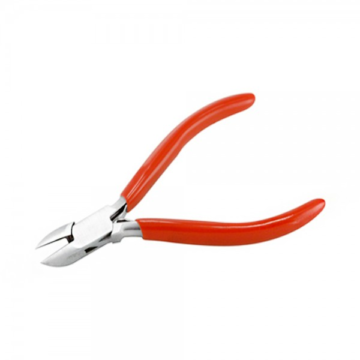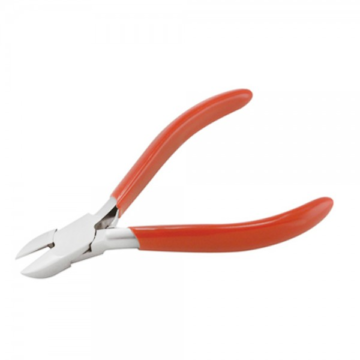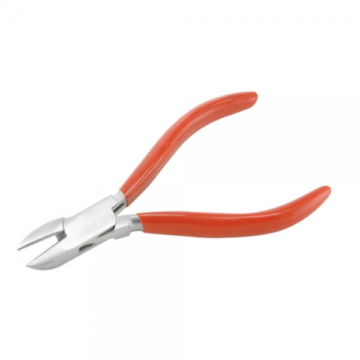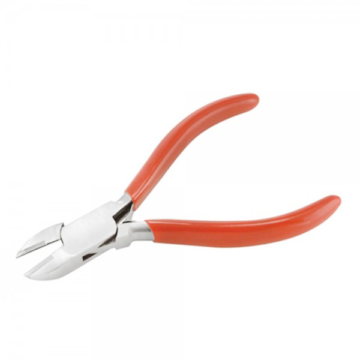
Behind every dependable pair of jewelry pliers sits a multi-stage manufacturing process. Buyers who understand it can judge tool quality far more accurately. In addition, knowing the steps makes supplier conversations easier. This guide explains how jewelry making tools are manufactured, from raw steel to finished product. It also shows what B2B buyers should check at each stage.
How Jewelry Pliers Are Manufactured
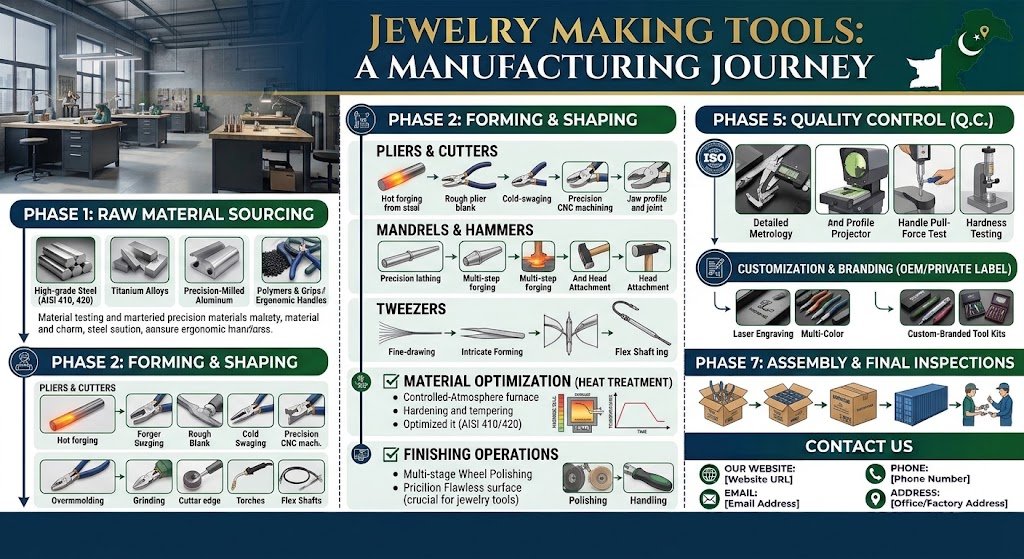
Jewelry pliers, such as chain nose, flat nose, and round nose styles, start as high-grade steel. A typical factory then moves them through the following stages:
- Steel cutting and blank preparation – First, workers slice steel rods into set block sizes. Each block then becomes one plier half.
- Drop-forging – Next, a furnace heats the blanks well above 1,000°C. Powerful drop hammers then press the glowing metal into precision dies, which shape the jaws, hinge, and handles.
- Trimming – After that, a trimming press shears off the flashing, which is the surplus metal squeezed out of the die.
- CNC machining and milling – Then automated machines shape the inner jaw surfaces. Depending on the plier type, these surfaces end up smooth, serrated, or conical. The machines also drill the central pivot hole.
- Heat treatment and hardening – Afterward, workers heat the parts and quench them. This step makes the metal hard and wear-resistant.
- Assembly and riveting – Next, a steel pivot rivet joins the two halves. Tight riveting keeps the jaws aligned, so they do not wobble side to side.
- Grinding and polishing – Then belt grinding or robotic arms give the outer surfaces a smooth, bright finish.
- Coating and branding – Finally, the factory adds rust protection and laser-engraved brand markings. It then dips the handles in vinyl or fits ergonomic grips, and cures them in an oven.
Why Each Stage Matters
Every step affects the finished tool. For example, forging gives the steel strength, while CNC machining sets jaw accuracy. Likewise, hardening determines how long the tool lasts, and riveting controls joint action. As a result, a rushed stage often shows up later as loose jaws, rough surfaces, or worn tips.
These stages apply across the full pliers range. Therefore, buyers can browse the jewelry tools category to see the products that result. Popular types include:
- Round nose pliers for loops and curves
- Bent nose pliers for tight spaces
- Parallel pliers for even gripping
- Forming pliers for consistent wire shapes
- Lindstorm pliers for precise, fine work
- Ergonomic pliers for comfort during long sessions
- Pliers kits that bundle common tools together
How Jeweler’s Saw Frames Are Made
Jeweler’s saw frames use lightweight, rigid metals or aluminum alloys. Their D-shape supports precise piercing and cutting. Manufacturers build them in three steps:
- Frame shaping – First, they bend or stamp flat steel or aluminum bars into the “D” shape, which creates the throat depth.
- Clamp machining – Next, they turn small brass or steel clamping blocks and wing screws on a lathe, or they mill them.
- Handle attachment – Finally, they bore out wooden or molded plastic handles and fit them with brass inserts. They then glue or thread each handle onto the lower tail of the frame.
How Files, Mandrels, and Burrs Are Made
Small precision shaping tools need specialized tool-steel techniques.
- Needle files – Makers forge them from high-carbon steel and taper them by rolling. Next, they cut the fine teeth with a precision chiseling machine or by acid etching. High-frequency heat treatment then hardens the file.
- Steel mandrels – Manufacturers turn tapered ring mandrels from tool steel on heavy-duty lathes. They then grind them to exact tolerances and case-harden them, so hammering does not dent the surface.
- Burrs and drill bits – CNC tool grinders machine them from solid tungsten carbide or high-speed steel. After that, diamond wheels cut the flutes, and vacuum heat treatment finishes the job.
Material Note for Buyers
Steel choice shapes how a tool behaves after production. For instance, many professional-grade makers use surgical-grade stainless steel, such as AISI 410 or AISI 420, because it resists rust and holds its shape. Surgical-grade here describes the steel quality only, since these tools serve jewelry making, not hospital or medical surgery.
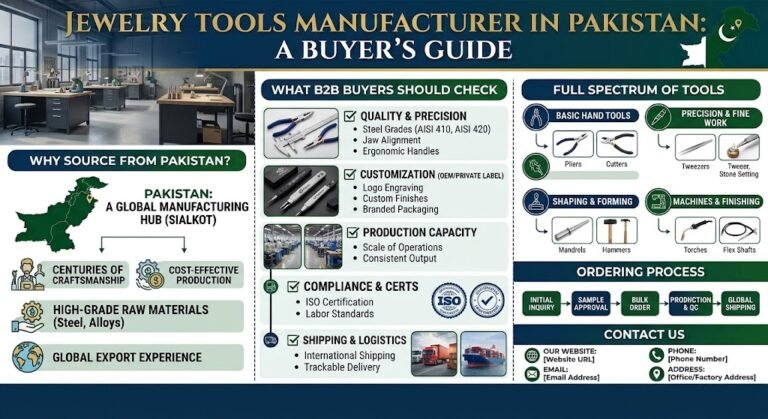
What B2B Buyers Should Check
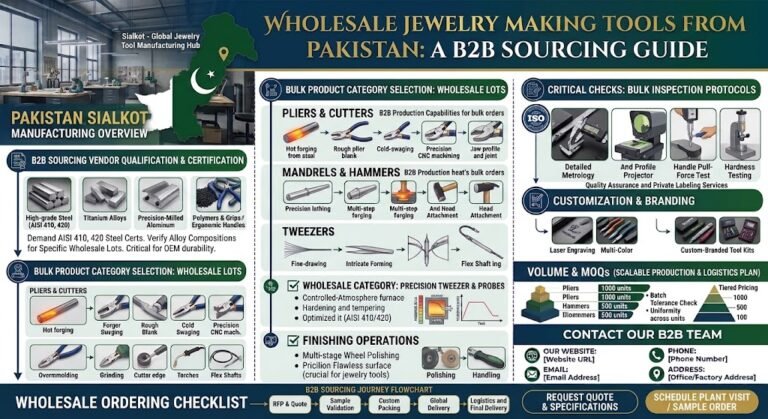
A short checklist helps buyers confirm that a factory controls its process:
- Which steel grade does each tool use?
- How does the factory check jaw alignment after assembly?
- What hardening process does the factory apply?
- How does it keep batches consistent with the approved sample?
- What branding and finishing options does it offer?
Clear, specific answers signal strong production control. Vague answers, by contrast, may point to limited oversight.
OEM and Private Label Options
Many brands want their own name on the tools. Therefore, ask whether the manufacturer offers laser engraving, custom handle finishes, tailored dimensions where the design allows, and branded packaging. Minimum order quantity (MOQ) is flexible, and it depends on the product, the level of customization, and the order volume.
For more on choosing a supplier, read our buyer’s guide to a jewelry tools manufacturer in Pakistan.
Final Thoughts
Quality jewelry tools come from careful forging, accurate machining, proper hardening, and skilled finishing. Overall, buyers who understand these stages can ask better questions and choose stronger suppliers. To discuss specifications, request OEM pricing, or ask about MOQ, contact the export team or request a quote.