Precision matters most in the optical industry. When technicians work with eyeglass frames, lenses, screws, temples, and other small components, even a small filing mistake can affect the final fit or finish. That’s why optical laboratories, eyewear technicians, and precision tool users choose specialized filing tools for controlled shaping, deburring, adjustment, and finishing.
Optical files form an important category of precision hand tools built for these exact applications. Different profiles and cutting surfaces let them handle different materials, shapes, and hard-to-reach areas. For optical tool wholesalers, distributors, and OEM buyers, choosing the right file matters. However, choosing a reliable Optical Files Wholesale manufacturer matters just as much.
What Are Optical Files?
Optical files are precision hand filing tools. Technicians use them for controlled material removal, shaping, adjustment, deburring, and finishing of small components. Unlike general-purpose files, precision files work best on parts that are small, delicate, or hard to access. Our Optical Files Wholesale collection includes several file types for optical lab work, eyewear adjustment, and precision metalworking.
Common applications include precision shaping, edge finishing, and deburring. Technicians also use optical files for controlled material removal from plastic and metal, eyewear frame adjustments, finishing small screws, and filing curved surfaces in hard-to-reach areas. Always choose the right file based on material, surface geometry, required finish, and how much material needs removal.
Diamond File Set for Hard Materials
Diamond files work well for fine, controlled filing on harder materials. Our 10-Piece Diamond File Set gives distributors and workshops a practical range of filing options in one kit. Because diamond files offer a specialized cutting surface, they suit controlled work on tougher materials especially well.
Needle File Sets for Precision Work
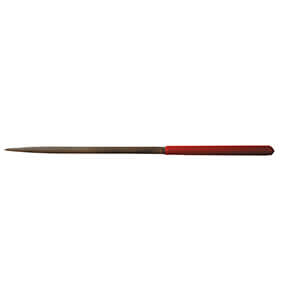
Technicians widely use needle files for fine-detail filing because of their compact size and varied profiles. Our 10-Piece Needle File Set offers multiple profiles, so users can match the right shape to each application. Meanwhile, the 5-Piece Needle File Set suits buyers who want a more compact option for precision metalwork. Overall, needle files give operators greater control when working on small components.
Half Round File
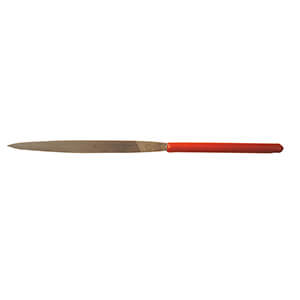
A half round file combines a flat and curved profile in one tool. As a result, it performs well across different surface geometries. It also reaches areas that a straight flat file cannot follow, such as curved or concave surfaces. In optical repair and precision metalworking, the right file shape improves access, control, and finish quality.
Rat-Tail File
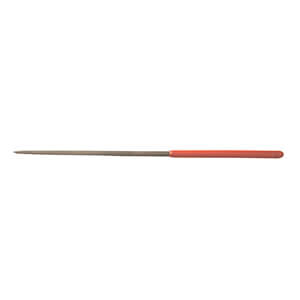
A rat-tail file has a round profile suited to narrow, curved, or small openings. Therefore, it works well wherever a flat or straight file can’t provide enough access. When buyers select a round-profile file, they should weigh diameter, length, cutting surface, and intended use.
Riffler File for Hard-to-Reach Areas
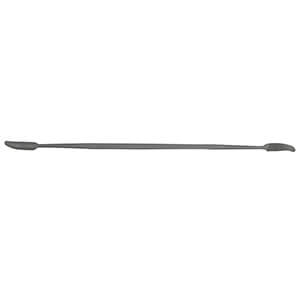
Riffler files handle contoured and difficult-to-reach surfaces well, thanks to their curved, double-ended design. Our 6-Inch Riffler File suits optical laboratory adjustments. Technicians use it for controlled material removal from plastic and metal, eyeglass barrel blending, drilled lens work, temple-angle adjustments, and smoothing freshly cut screws. Its curved profile reaches areas a straight file simply cannot. This 6-inch steel riffler file also comes available for OEM applications.
Diamond Files vs. Needle Files
Both file types serve precision filing needs, though their strengths differ. Diamond files suit hard-material and specialized fine-filing applications. Needle files, on the other hand, offer more versatility for small components and detailed work across multiple profiles. So, buyers needing several filing shapes may prefer a needle file set, while those with hard-material requirements may find a diamond file set more appropriate.
How to Choose the Right Optical File
First, consider the material you’re working with. Next, choose a file profile — flat, round, half round, riffler, or another shape — based on the component’s geometry. Size and length also matter, since they affect control on small parts. Additionally, match the file’s cutting characteristics to your desired finish rather than focusing only on maximum material removal. Finally, remember that a file suited for optical lab adjustments isn’t necessarily the best fit for general metalworking.
Optical Files Wholesale Manufacturer
We manufacture and wholesale-supply optical files for laboratories, distributors, and OEM buyers worldwide. A well-rounded Optical Files Wholesale range helps wholesalers and distributors serve diverse customer requirements with consistent quality. For businesses that need bulk quantities, custom OEM specifications, or private label solutions, partnering with an experienced manufacturer supports long-term reliability. Explore our full range today to find the right filing solution for your business.