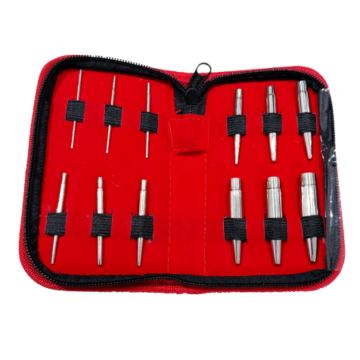
Every instrument in a professional body modification kit serves a specific, deliberate purpose. Sponge tweezers and Pennington tweezers stand out among the essentials when it comes to securing tissue and handling jewelry with precision. Specialized slotted designs, precision cuts, and compact mini sizes have refined how modern piercers approach these tools. This guide breaks down the features and applications of both instrument types for studios and wholesale buyers building out their inventory.
Mini Foerster Sponge Tweezers: Slotted and Cut Variants
Standard sponge forceps feature solid oval heads, but professional piercing studios rely heavily on a more specialized version: mini Foerster sponge tweezers with 2.25mm or 3mm slots. These specialized heads incorporate precise cuts or grooves rather than a solid surface.
This slotted design solves a specific problem during procedures. The built-in slots allow the piercing needle to pass directly through the tool’s head. As a result, the piercer gets a stable, guided passage for the needle while maintaining a secure grip on the tissue throughout the placement.
The mini sizing also matters for control. Smaller heads give piercers a clearer working view and finer handling in tight anatomical areas, where a standard-sized sponge forcep would obstruct visibility.
Mini Pennington Tweezers: Slotted, Cut, and Back-Lock Designs
Pennington tweezers are widely recognized for their triangular heads and strong tissue control. Among the available variants, the 5.5-inch slotted Pennington tweezers with back-lock stand out for a specific reason: the back-lock mechanism offers hands-free security once clamped, freeing the piercer’s hand for other steps in the procedure.
The slotted or cut-out head design plays a functional role beyond the locking feature. It distributes holding pressure evenly across the tissue contact area. Consequently, piercers can anchor skin or structure precisely without slipping or causing unnecessary trauma to the surrounding area, an important detail for client comfort and procedural safety.
Comparing the Two Tool Types
| Feature | Mini Foerster Sponge Tweezers | Mini Pennington Tweezers |
|---|---|---|
| Head Shape | Oval with 2.25mm/3mm slots | Triangular, slotted/cut design |
| Primary Function | Guided needle passage through slotted head | Even pressure distribution, tissue anchoring |
| Locking Mechanism | Standard grip | Back-lock (hands-free) |
| Best Suited For | Needle-guided placements | Securing tissue or structure precisely |
Why Slotted and Mini Designs Matter for Studios
The shift toward slotted and mini variants reflects a broader trend in piercing technique: tools designed around specific procedural needs rather than general-purpose use. A slotted head isn’t simply a smaller version of a standard tool; it changes how the instrument interacts with the needle and tissue during the procedure itself. Studios that adopt these specialized designs typically report smoother needle passage and more consistent tissue control, particularly during placements that demand precise anchoring.
For wholesale buyers, stocking both slotted sponge tweezers and locking Pennington tweezers rounds out a studio’s core tissue-handling toolkit, alongside the bead and labret tweezers covered in general piercing tool guides.
Sourcing Precision Mini and Slotted Tweezers
As a direct manufacturer and global exporter, Desire Surgical engineers high-grade surgical stainless steel mini, slotted, and cut-design sponge and Pennington tweezers. Our full tweezer range covers these specialized configurations for studios and distributors building a complete inventory. Equip your wholesale catalog or studio kit with these precision instruments to ensure reliable, professional performance.