What Are Optical Tools?
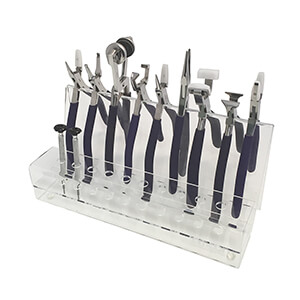
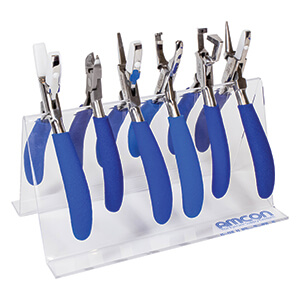
Optical tools are precision hand instruments used for eyewear repair, spectacle frame adjustment, lens fitting, and optical assembly work. A complete optical tools range typically includes cutting pliers, nylon jaw pliers, nose pad adjusting pliers, sizing pliers, and complete repair kits, each suited to a specific adjustment or assembly task.
For distributors, wholesalers, and optical workshop suppliers, choosing the right optical tools manufacturer is a sourcing decision that goes well beyond price. Material quality, precision, OEM capability, packaging, and long-term supply reliability all factor into the buying decision.
What Wholesale Buyers Should Evaluate
Material and manufacturing quality. Professional optical tools are used repeatedly in demanding workshop conditions, so material and construction quality matter. Stainless steel is widely used in professional tools for its durability and corrosion resistance. Buyers should request clear material specifications from a manufacturer rather than relying on general claims of “high quality.”
Precision and alignment. Eyewear repair requires exact tolerances. Misaligned jaws or inconsistent cutting edges can complicate delicate frame adjustments and risk damaging components. Before committing to a bulk order, it’s worth evaluating jaw alignment, cutting performance, grip, spring action, and surface finish on a sample batch.
Optical Cutting Tools
Cutting instruments are a core category in the optical tools market, with designs including diagonal bevelled cutters, end cutting pliers, front cutters, and heavy-duty side cutters. Selecting the right wholesale optical cutting tools depends on the frame material, intended application, and expected workload — not just the general tool name. Distributors who stock several cutter designs are better positioned to serve the varied needs of optical repair professionals.
Ergonomic and Sizing Pliers
For technicians using hand tools throughout the day, ergonomic optical pliers offer a more comfortable grip during repetitive adjustment work, while nylon jaw designs help minimize marking on delicate frames.
Frame adjustment also relies on specialized eyewire sizing tools. While this is a more specialized category, it’s a valuable addition for distributors supplying professional optical workshops — buyers should assess design, precision, material, and finish before adding it to their catalogue.
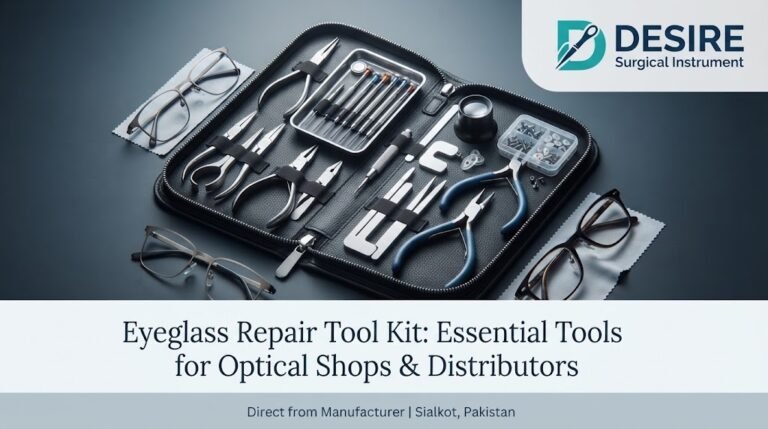
Optical Tool Kits
For optical stores, repair workshops, and distributors, optical repair tool kits bundle essential instruments into one coordinated set rather than requiring separate purchases. Kits also open opportunities for custom tool combinations, branded cases, and private labeling — making them a strong option for businesses building their own branded product line.
Why Buy Directly From a Manufacturer
Sourcing directly from a manufacturer offers several advantages: competitive wholesale pricing, bulk order support, consistent quality, OEM manufacturing, private labeling, custom packaging, and export experience. That said, price shouldn’t be the only deciding factor — production capability, communication, and packaging support matter just as much.
OEM and Private Label Optical Tools
Distributors and established brands can use OEM and private label manufacturing to build a customized optical tools range. Depending on the manufacturer’s capabilities, this can include custom branding, logo engraving, handle design, packaging, and curated tool combinations tailored to a specific target market.
Before Placing a Wholesale Order
Before confirming a bulk order, request product specifications, material details, dimensions, sample availability, production lead time, packaging options, OEM/private label terms, and export documentation. Minimum order quantity (MOQ) is generally flexible and depends on the specific product and customization involved, so it’s worth confirming this directly with the manufacturer rather than assuming a fixed threshold.
Choosing the Right Manufacturer
A reliable optical tools manufacturer should function as a long-term supply partner. Before committing, ask whether they manufacture in-house or trade third-party stock, whether they support bulk production, whether OEM and private label services are available, and whether they can maintain consistent quality across repeat orders.
Conclusion
Sourcing optical tools for wholesale distribution takes more than comparing unit prices — quality, precision, customization, MOQ flexibility, and export reliability all factor into the decision. Looking for a dependable optical tools manufacturer for bulk or OEM supply? Explore our professional optical cutting tools range or get in touch with Desire Surgical Instruments to discuss wholesale pricing and custom requirements.