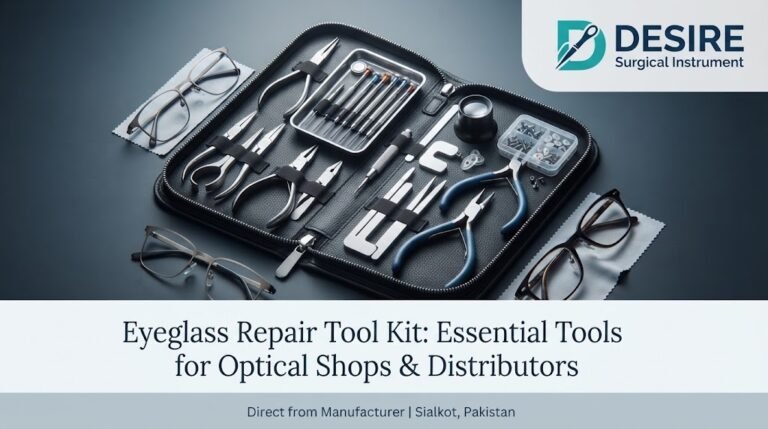
What Is an Optical Tool Kit?
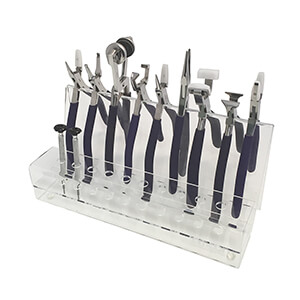
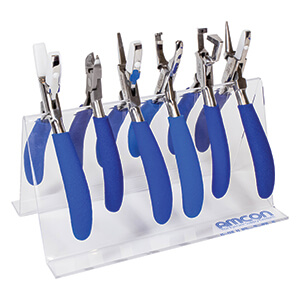
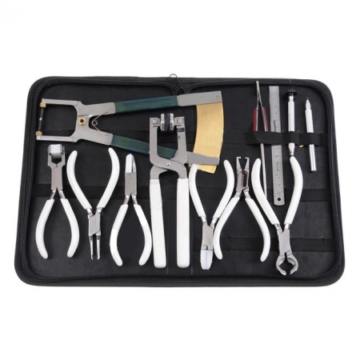
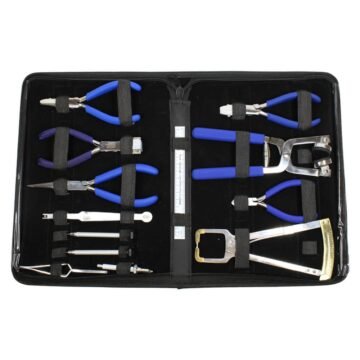
An optical tool kit brings together the essential instruments used for eyewear repair, frame adjustment, and optical dispensing. It combines them into one organized set. Depending on configuration, a kit may include pliers, cutters, screwdrivers, and measurement tools. A well-built optical tool kit helps workshops and distributors keep essential instruments organized and ready for daily use. The ideal configuration ultimately depends on the buyer’s application, skill level, and working environment.
Why Buy Kits Instead of Individual Tools?
For professional buyers, complete kits offer real procurement advantages. First, sourcing multiple instruments as one coordinated set simplifies purchasing and inventory management. Additionally, a kit typically delivers a consistent design and finish across all included tools. Manufacturers can also build customized combinations for distributors and private-label brands. For example, a distributor might need an entry-level kit for smaller workshops, while another needs a comprehensive kit for professional dispensing. Because of this flexibility, working with an experienced optical tools manufacturer matters for businesses that need multiple tool configurations.
What Wholesale Buyers Should Evaluate
Material and manufacturing quality. Kit instruments see repeated use in demanding conditions. So material, construction, surface finish, jaw alignment, and spring action all deserve close attention. Stainless steel remains the standard choice for professional hand instruments. This is largely due to its durability and corrosion resistance. Before committing to bulk production, buyers should request clear specifications and evaluate samples first.
Tool selection over tool count. A well-curated 6-piece kit can outperform a larger kit padded with rarely used instruments. Depending on the application, a strong kit may include optical pliers, cutting pliers, nylon jaw pliers, frame adjustment pliers, screwdrivers, and measurement tools. For distributors with specialized cutting needs, optical cutting tools are also worth considering as a complementary line.
Ergonomic design. Technicians often use hand tools for hours at a stretch. As a result, ergonomic handles help improve comfort and control during repetitive adjustment work. Buyers looking for this feature can consider Ergo Slim optical pliers as part of a professional range. Meanwhile, nylon jaw designs help minimize marking on delicate frames.
Precision and alignment. Jaw alignment, tool movement, cutting performance, grip, and spring action all affect how reliably a kit performs. This matters especially during delicate adjustment work. Therefore, sample approval before bulk ordering is particularly useful for distributors developing a branded product line.
Types of Optical Tool Kits
Buyer needs vary, so manufacturers typically offer several kit categories:
- Basic kits — suited to optical stores, smaller workshops, and students who need essential tools without a large inventory.
- Professional dispensing kits — a broader tool selection for regular adjustment and dispensing work.
- Ergonomic kits — built around comfortable handling for repetitive adjustment tasks.
- Customized kits — built to a buyer’s exact specification, including tool selection, packaging, and branding.
Stocking for Wholesale Distribution
Distributors often need more than one kit type. After all, their customers span different segments — entry-level, professional dispensing, ergonomic, and custom-branded. Consequently, a manufacturer with a broad optical tools range makes it easier to source individual tools alongside complete kits from a single supply relationship.
OEM and Private Label Kits
OEM and private-label manufacturing lets distributors and brands move beyond generic kits. Instead, they can build a customized product range under their own brand. Depending on capability, this can extend to brand logo, tool selection, custom combinations, packaging, and labeling. For this reason, discussing OEM requirements directly with the manufacturer early helps build a more consistent long-term strategy.
Choosing the Right Manufacturer
Before selecting a supplier, evaluate a few key factors. First, confirm manufacturing capacity and consistency across repeat orders. Next, check customization and OEM support, along with packaging quality. Finally, ask about MOQ for standard versus customized kits, sample availability, and export experience.
What to Confirm Before a Bulk Order
Request product specifications, material details, tool count, and dimensions. Also confirm MOQ, wholesale pricing, and sample availability. In addition, ask about production lead time, packaging options, OEM/private-label terms, branding requirements, and export documentation. Having these details upfront reduces misunderstandings and speeds up wholesale purchasing.
Building a Complete Product Range
A strong distributor lineup doesn’t have to rely on kits alone. Instead, pairing kits with specialized instruments works well. Options include eyewire sizing pliers, lens axis pliers, temple angling pliers, optical files, and optical tweezers. This approach lets distributors offer both complete solutions and individual replacement tools.
Conclusion
Choosing the right optical tool kit manufacturer means looking past price. Buyers should also weigh material quality, precision, tool selection, ergonomic design, and packaging. MOQ flexibility, OEM capability, and long-term supply reliability matter just as much. Ready to source a basic repair kit, professional dispensing kit, or a fully customized private-label solution? Explore the Optical Tool Kits range or browse the complete Optical Tools collection to find the right fit for your wholesale requirements.